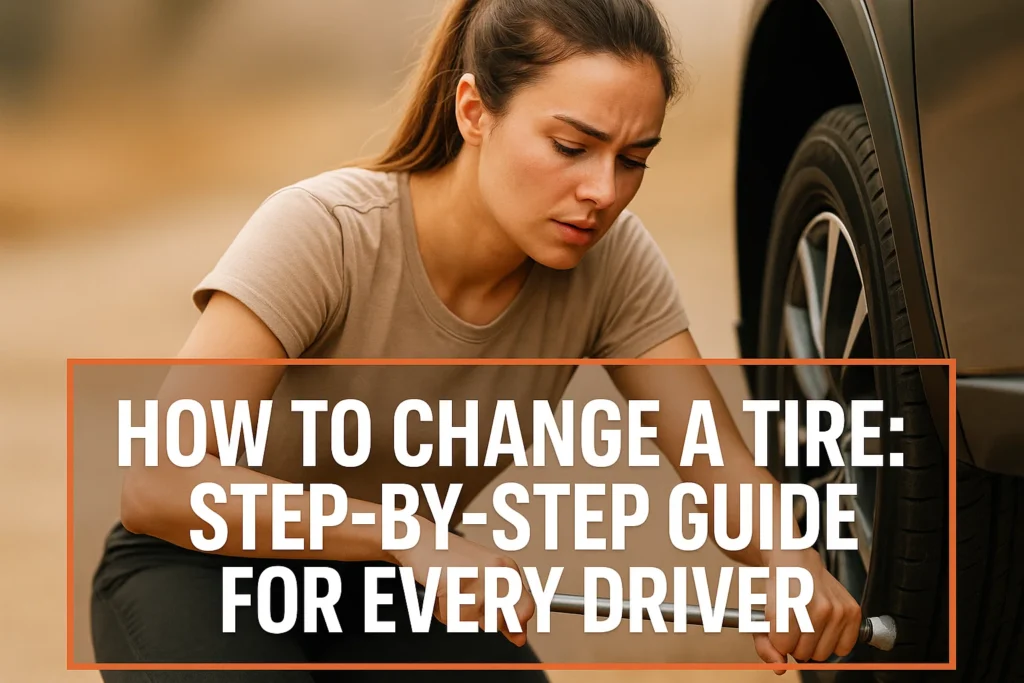
Getting a flat tire is one of the most unexpected challenges that can happen to you on the road during your commute. It can even happen when your car is parked in the driveway. It’s challenging and frustrating without any offense, but the world doesn’t end here. When we know it’s such a sudden incident and can happen to anyone at any time, awareness of how to change a tire is one of the basic lifesaving skills we must know. You don’t need to wait for Roadside Assistance every time for a flat tire. You can change your tire on your own, with minimal knowledge and the right tools.
This blog explores how to change a tire with easy steps. This guide is for everyone, whether you’re a beginner or a skilled driver.
Step-by-Step Instructions to Change a Tire
You might feel tire changing is a complicated and challenging task, but in reality, it’s not challenging if you haven’t done it before. After your first attempt, you start feeling it’s easy to do a task. Here are the following simple steps to guide you on how to change a tire safely and effectively:
Park Your Vehicle on a Safe, Level Surface
When you spot a deflated tire, immediately identify a secure spot to brake. The best spot for changing a flat tire exists as a stable flat terrain that remains outside the path of moving traffic. Pull your vehicle only into solid flat areas that are safe from roads and do not stop on either curved terrain or slopes, or fields of grass, or sandy surfaces. Your car maintenance process will become safer when you use a flat, stretched-out surface because it prevents vehicle movement. Once you locate a safe area, stop your vehicle in park condition and manual drivers keep in mind to shift into gear, while keeping the steering wheel straight.
Turn on Hazard Lights and Apply the Parking Brake
Drive safely by enabling your car’s hazard lights, since this notifies other drivers about your stopped position. The hazard lights should be activated at night or when visibility is low for other drivers on the road. Secure the vehicle from movement by activating the parking brake. The procedure provides greater security when changing tires.
Loosen the Lug Nuts Slightly
Start loosening all lug nuts on the flat tire using a lug wrench called a tire iron, in a counterclockwise direction. Turn them counterclockwise. Apply body weight carefully when loosening lug nuts that might require additional effort to break free. You should only push the lug nuts six to eight revolutions at this point rather than completely removing them. Before vehicle elevation, you should loosen lug nuts to stop wheel movement.
Place the Jack Under the Vehicle and Lift It Up
Find the designated jack point in your vehicle’s documentation because it should be located behind the front wheel or in front of the rear wheel along the frame. Using an incorrect jack placement location may harm your automobile’s structure while making the vehicle unsafe to work on. First, position the jack securely beneath the vehicle, while the flat tire should rest at 5–6 inches above the ground during the lifting process. Proceed with caution to the following step when the car stands stable and steady.
Remove the Lug Nuts and Take Off the Flat Tire
When your car reaches the desired height position, complete removing the lug nut screws while putting them somewhere secure to prevent rolling. To remove the tire from the wheel bolts, pull it straight toward you. Be cautious when lifting because the jack has a moderate weight.
Mount the Spare Tire onto the Lug Bolts
First, set your spare tire, known as the “donut,” when small, into position with its holes matching the wheel bolts. Push the tire to its full length onto the hub until it rests tightly against the surface. The edge of the spare tire should reach the exact position of the brake disc or drum.
Hand-Tighten the Lug Nuts in a Star Pattern
Manual installation of lug nuts before using a sequence of star-shaped bolt tightening. You should begin tightening one bolt before moving to the bolt placed on the directly opposite side, then continue the same pattern until all bolts are secure. The star pattern arrangement ensures wheel position balance, which prevents unwanted wheel movement. The nuts should be tightened enough to reach snugness at this stage, since the final tightening procedure will be performed after lowering the car.
Lower the Vehicle and Finish Tightening the Lug Nuts
Drive the vehicle down toward the ground while completing additional bolt tightening using a star pattern. You should carefully lower the vehicle down using the jack until it reaches the ground level. After the car reaches complete floor level and before removing the jack, you will use the lug wrench to secure the nuts according to their star pattern. Avoid over-torquing because it may damage the thread beginning.
Check Tire Pressure and Secure the Tools
You should use a tire pressure gauge to inspect the air pressure inside your spare tire. You should drive at a reduced speed to reach the nearest gas station where you can inflate your spare tire to the correct PSI measurement. Stow your jack, flat tire, and tools securely in the trunk. You can resume driving now.
Conclusion
A basic skill on how to change a tire proves exceptionally beneficial during critical situations on the road. Drivers, both new and experienced, should learn this information as it reduces their anxiety while saving their time and money. The quick, safe procedure to handle a flat tire requires you to follow the steps previously defined. Routine inspections of your spare tire, combined with maintenance of your jack and lug wrench, remain essential throughout the ownership of your vehicle. Don’t hesitate to contact us at Burnham Towing for consultation, professional inspection, and Roadside Assistance. The small effort you spend in advance will pay off during emergencies since you will know precisely how to handle the situation.
FAQs
When your tire is visibly damaged (i.e. has punctures, cuts, or bulges), or when the tire is so worn out that the tread depth is less than the legal limit (typically 2/32 of an inch), then it is time to replace the tire. These problems can be detected by a brief examination.
No, you need a jack to raise your car off the ground to take off the flat tire and put on the spare. In case you do not have one, you should not even think about changing the tire. Never forget to have a working jack in your emergency kit in your vehicle.
To prevent flat tires and damage, make sure your tires are inflated correctly, rotate them every now and then and check them to see any visible damage or wear. To prolong their life, one should not drive over potholes, curbs, or sharp objects.